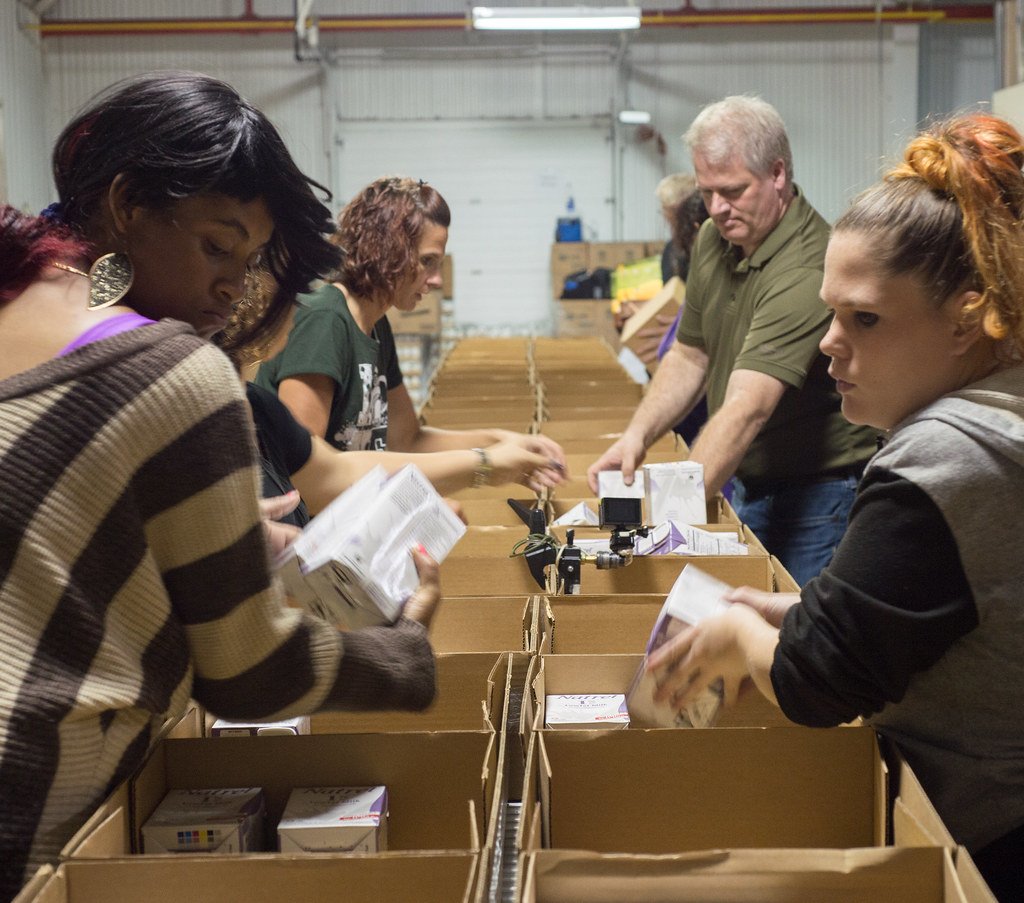
The 6:45 AM Load Line
At 4:30 AM, the first manifest drops from Shipper A. At 5:15 AM, Shipper B follows. By 6:45 AM, your 45 vans are double-parked at the dock, doors open, and three loaders per shift are racing to stuff 200 packages into each van before the 7:00 AM departure window closes. The scanner beeps as boxes hit the shelf, but the beep only means the laser read the barcode, not that the package belongs in that specific van, or that it’s physically present at all.
This is the load verification gap. Your TMS shows Van 12 has 198 stops assigned. The loader’s tablet shows the same. But the manifest is a digital assumption, not a physical count. A package gets kicked to the wrong van by the sorter. A multi-stop batch gets scanned as loaded while still on the cart. A single high-value item hides under a seat cushion, invisible to the system but very visible to the driver at stop #47. By the time the driver discovers the miss, they’re twelve miles from the station with 163 stops still ahead of them.
The $18 Dry Run
When a driver opens the cargo bay at address #47 and finds air instead of the 12-pound package, the meter starts running. The driver spends four minutes tearing through totes, checking the cab, and verifying the manifest. Another three minutes on the radio with dispatch to confirm the package isn’t on another van. Then they mark the exception—"Attempted - Package Not Found"—and drive to stop #48, which is eight minutes away in the wrong direction because the route sequence is now broken.
That’s fifteen minutes of driver time at $0.58 per minute, or $8.70. Add four miles of unnecessary driving at $0.72 per mile for fuel and wear, costing $2.88. The shipper hits you with a $6.50 service failure fee for the exception code. Total cost per dry run: $18.08. If this happens to eight vans daily—statistically likely with 9,000 stops and a 99.2% accuracy rate—you’re bleeding $145 per day. That’s $37,700 annually in direct costs, not counting the admin who spends two hours every afternoon reconciling which packages were actually delivered versus which ones your drivers spent half their day hunting for.
Why the Manifest Lies
The root problem is a confusion between sortation data and load verification. The shipper’s manifest is generated at 3:00 AM when packages clear the hub’s sortation scanners. That data feeds your TMS via EDI or API, marking Package #123456 as "inducted to station" and "assigned to Van 12." But induct-to-station is not load-to-vehicle. Between the sorter and the van bay, packages travel on rollers, sit in buffer lanes, and get handled by multiple contractors.
Your current system assumes that if the package is assigned to the van in the 3:00 AM data file, it made it onto the van by 7:00 AM. There is no verification bridge. The loader’s scan is treated as gospel, but the scan happens while the package is in motion, not while it’s at rest in the correct bay. Meanwhile, EDI delays mean a package physically loaded at 6:50 AM might not show in the system until 9:00 AM, creating phantom availability in the morning and ghost deliveries in the afternoon. The digital thread breaks at the dock door, and you don’t know it’s broken until a customer calls asking why their tracking shows "Out for Delivery" but their porch is empty.
The Scorecard Death Spiral
National shippers don’t care why the package didn’t arrive. They track "Delivery Attempted" exceptions with sub-codes for "Package Not Found" and "Load Error." Accumulate more than 0.4% of these codes across your 9,000 daily stops, and you drop from Tier 1 to Tier 2 on the DSP scorecard. That’s not a trophy; it’s a rate cut of $0.15 to $0.25 per stop. On 9,000 stops, that’s $1,350 to $2,250 lost revenue per day.
Worse, shippers audit photo proof of delivery randomly. If your driver photographed the wrong package because the manifest was scrambled, or if they marked "Delivered" to avoid the service failure penalty but the package is still rolling around the cargo bay, you face chargebacks. Three consecutive months of scorecard drops, and the shipper reallocates routes to a competitor. The load verification gap isn’t an operational annoyance; it’s a contract termination risk hiding in your morning routine.
What Good Looks Like
Fixing this requires treating the van like a warehouse bin. You need a verification layer that confirms physical presence before the ignition turns. A proper last-mile manifest system runs on loader handhelds that perform five checks before the bay door closes:
- Manifest Match: The scanned package ID exists in today’s dispatch file for this specific van, not just the station.
- Sequence Validation: The scan timestamp is after the package cleared the sortation induct scan, confirming it physically arrived at your facility.
- Load Completion: The package is scanned while stationary in the van bay, not while passing through on a conveyor, using geofencing to confirm location.
- Weight Cross-Check: If available, the system compares the package’s expected weight against the van’s onboard scale delta (useful for high-value electronics or pharmaceutical deliveries).
- Driver Acknowledgment: The driver app displays a simple count: "Manifest: 198 / Scanned Load: 196." The driver must acknowledge the 2-package discrepancy before they can mark the route as "En Route," forcing immediate resolution.
When these checks pass, the system locks the manifest. If they fail, an exception ticket routes to the dock supervisor’s tablet, not the driver’s radio at stop #47. The driver never leaves with a phantom package because the van can’t be dispatched with an open discrepancy.
The Integration Reality Check
This isn’t a routing problem. Your route optimizer works fine. This is a warehouse put-away verification problem applied to rolling stock. Off-the-shelf delivery apps assume the manifest is correct; they optimize routes based on bad data. You need a custom middleware layer that sits between the shipper’s manifest API and your driver app, injecting verification checkpoints for the loaders.
Build vs. buy isn’t the question here—buying isn’t an option. Generic TMS platforms don’t have loader workflows; they have driver workflows. You’ll need to integrate with your sortation equipment’s PLC to capture true induct times, build a lightweight loader interface that works on $200 Android tablets, and create exception handling that routes discrepancies to a human before the van departs. It’s 120 hours of custom development to save $37,000 annually in dry runs, plus the immeasurable value of keeping your tiered shipper contracts intact. For a 45-van operation, that ROI hits in eleven weeks. After that, every morning starts with a locked manifest, not a scavenger hunt.